Here you will find the script, links, and bibliography for the YouTube video titled The Truth About Modern Knitting Patterns on my channel Fiber Gremlin.
The Script
So… I’ve been annoyed about some stupid reddit craft snark for a while now - so long in fact that both myself and the internet have long forgotten what the original issue was and why it mattered.
AND YET, I am still bothered by it, so we’re going to talk about it today
All jokes aside, I do know what has been bothering me all these months and it’s a much smaller piece of the puzzle of pattern sharing.
Now, i’m not going to get into pattern sharing itself in this video - if you want to hear my thoughts on it, leave a comment below, but otherwise I would encourage you to go watch Cinema Knit’s video on this because she is incredibly insightful and much more articulate about this subject than I ever could be.
BUT, there is one part of this discourse that she addresses in her video about pattern sharing that has really stuck with me and that is - the argument that it’s okay to share patterns because modern knitting patterns aren’t very good. As I understand it, the thought process here is that any amateur wannabe knitfluencer social media babe can write and charge for a subpar quality knitting pattern these days when publishing knitwear designs in the days of old used to require many years of skill and knowledge development. This therefore means that contemporary knitting patterns are bad because the designers lack skill, and that old patterns are good because they were more complex, perhaps more thoughtful, and therefore better quality. And because of that lack of quality, real or perceived, of these social media knitters, it is then your prerogative to distribute this pattern for free because you don’t think it’s very good and they don’t deserve to be compensated because of that.
Now, first of all, I don’t think this is a sound argument. Second of all, any time I hear an absolute statement like this, Old knitting patterns = good, new knitting patterns = bad, my immediate thought is… okay, “prove it” - because life is generally messy and complex, and things rarely boil down to black and white, good and bad.
There are a lot of reasons to the development of this justification - all of which I will again refer you to Cinema Knit’s video, especially where she talks about the, quite frankly, ridiculous standards that knitwear designers are held to today - because in this video, what I wanted to do is actually look at old knitting patterns to explore this idea of old is good and new is bad. In essence, to prove that older knitting patterns aren’t actually necessarily better than modern ones in an effort to convince you how lucky we are to have the patterns we have today, the resources we have via the internet - like YouTube, Reddit, and each other - today, and how significantly more accessible and approachable knitting patterns have become since the very first known extant knitting pattern written in English from the 17th century.
So, I set off for the local archive that holds over 5500 pieces of knitting and related arts patterns dating back to the mid 19th century - we’re talking like the 1840s. I went looking for something to help me answer the question ‘are old knitting patterns really better than new ones?’ - but what I found was MUCH more interesting - but i’m getting ahead of myself.
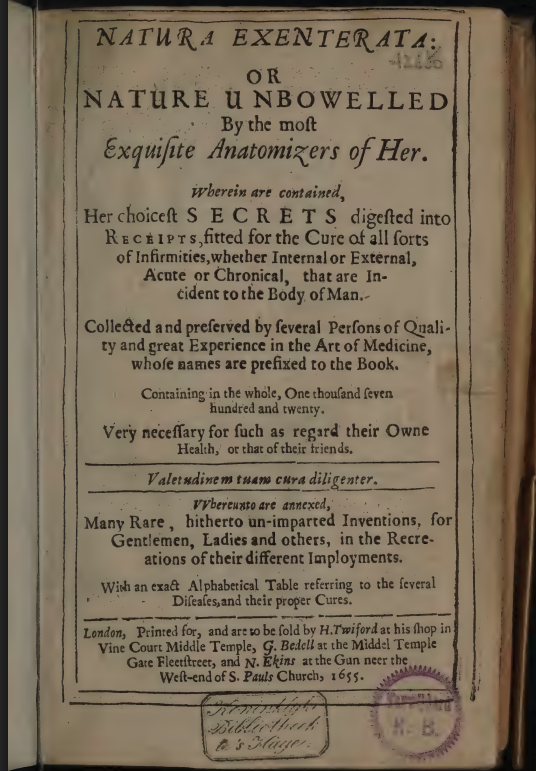
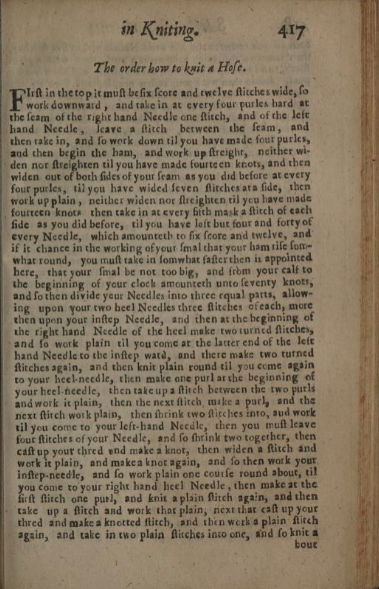
‘The order how to knit a Hose’ in Natura Exenterata (1655)
First, before we talk about what I found, I think we have to establish a few things. Primarily, I needed to know what characteristics make a knitting pattern ‘good’ that we can then use as a benchmark to judge other patterns by.
Now, if I were doing this based solely on my own opinion, I would want to see things like clear instructions whether they’re written or charted, information about gauge, details about preferred yarns, and size inclusivity. I want to pause here and acknowledge that this is a pretty high standard to hold knitwear designers to - these are things that require time and money and, if you have any respect for the designer at all - deserve to be compensated. I think you can extrapolate from there how I feel about pattern stealing.
BUT you shouldn’t take just my word for it because I also ran a survey to gain a broader opinion base from which we can aggregate common characteristics that people look for in a ‘good’ knitting pattern.
Respondents to this survey commonly referred the the following as important ‘good’ characteristics:
Clear, easy to follow instructions (without being too verbose)
Details about construction AND order of operations
Charts AND written instruction options
Robust information about gauge
Details about preferred fiber type including drape and meterage
Thoughtful size grading
Advertised with photos
Includes tutorials
And bonus points if it’s tech edited, has schematics that you can view before purchasing, is gender inclusive (meaning that it uses gender neutral language and 2+ versions for different chest sizes), and is a unique design.
Phew! I do have to say, with peace and love and no judgement, even I felt like this was a lot to expect from a knitwear designer while reading these responses, especially given the way we treat them!
I also asked respondents about your experiences with using older patterns, your preference for old patterns over modern patterns, and any other thoughts you would like to share with me about the current state of knitting - all of which we will get to later in the video - but if you didn’t get the chance to respond to the survey, please feel free to share your thoughts on those things in the comments.
BUT! With these common metrics by which we can assess an older pattern for quality, it’s time to talk about what I looked at, and what I found.
So, to preserve my sanity from looking at all 5500 pieces in this particular collection, I took a much smaller sample of the patterns. I only looked at knitting patterns - excluding patterns for all other types of needlework - and of those, I tried to look at one to two books/booklets/magazines, etc from each decade. In total, I ended up analyzing 25 books/booklets/magazines starting in 1844 (the oldest pattern book in the collection), and ending in 1981.
So, how do these patterns compare against our established characteristics?
Well, of these patterns, I found that
All patterns contained some amount of detail about construction and order of operations, but only insofar as they… were patterns that if you read all the way through before beginning, would give you a sense of these things.
CHARTS: When it comes to charts versus written instructions… A vast majority of them, at 18 patterns, did NOT provide charts - only written instructions. Of those that did provide charts, 6 were for colorwork, and only 1 was solely dedicated to the actual overall knitting instructions, although some colorwork charts did include things like increases and decreases.
GAUGE: 15 had information about gauge, 7 did not, and 3 kind of had gauge information, meaning that they told you what specific type of yarn to use, and sometimes mentioned a needle size meaning you could extrapolate out what gauge they might have meant you to have, but otherwise the provided information did not give like a stitches and rows per inch. Some patterns did give stitches per inch, but not row. However, 20 patterns did include some kind of needle information, but it isn’t until the turn of the century that we start to see numbered sizes of needles become more common.
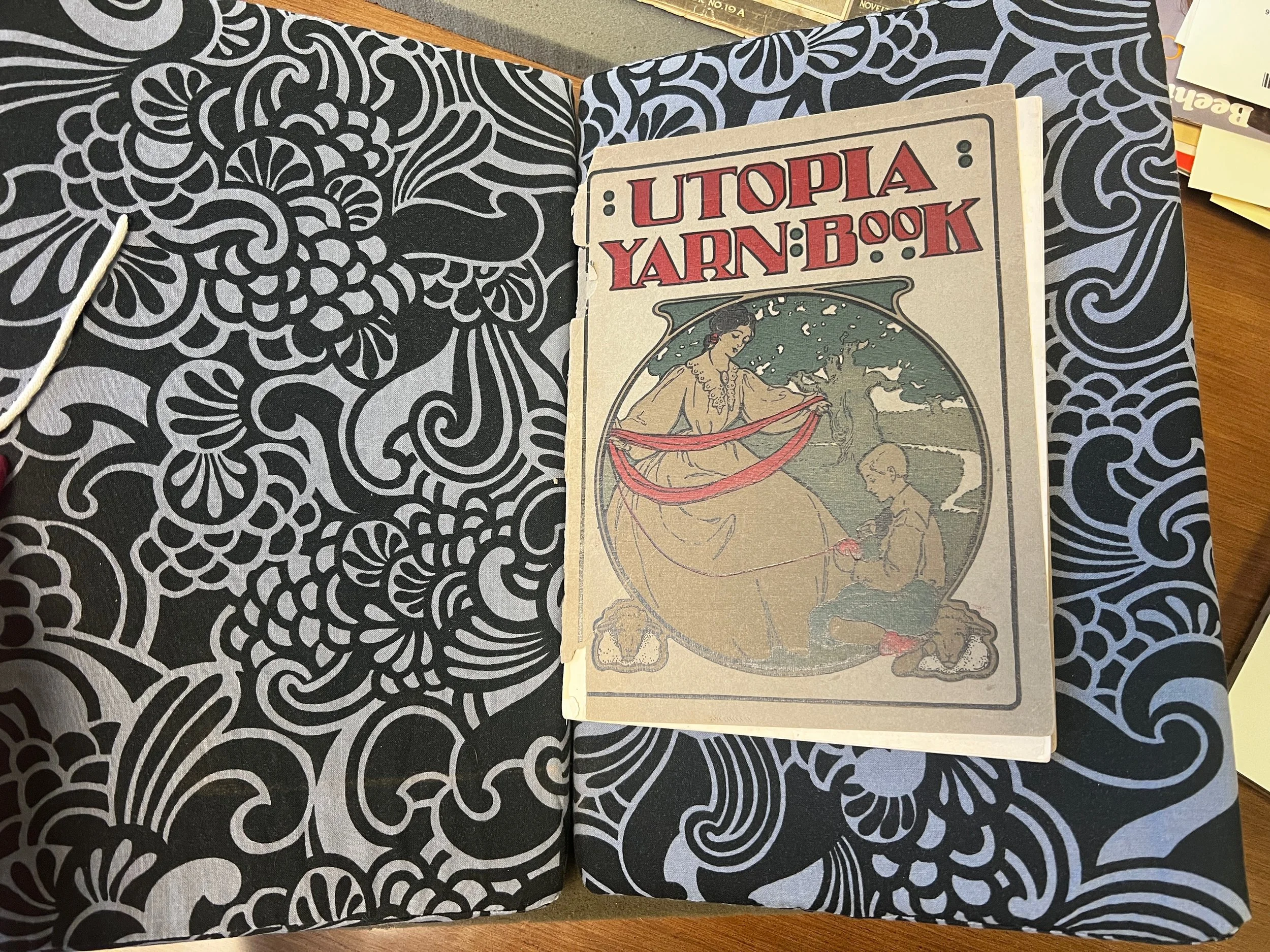
For example, the 1870 Beeton’s Book of Needlework contained a table of sizes of Messrs Walter Evans & Co’s knitting cotton, but needles were only described as ‘thin needles’ or ‘ steel needles’. This might be referring to some common knowledge from that time period, but it is lost on me. Furthermore, the 1894 Designs in Knitting, netting, & crochet, refers to needles simply as “steel knitting-needles”, but just 10 years later in 1904, the Utopia Yarn book contains images of the numbered sizes of knitting needles and crochet hooks that were used at the time, indicating that some kind of standardization was taking place.
FIBER: For fiber information, 22 patterns gave details about preferred fiber types while 3 did not. However, this only sometimes included meterage and did not include drape whatsoever. Furthermore, this rarely included information about the thickness of the yarn itself. Earlier patterns sometimes included vague details about using a robust wool versus a light silk, but nothing terribly clear or standard. It was really up to you to be able to figure it out. Around the turn of the century is when you start to see yarns being referred to by their ply, but ply doesn’t necessarily correlate to thickness - at least not in today’s yarns. It wasn't until around the mid to late-century that the patterns I looked at started to use the yarn weights that we know today - terms like fingering, sport weight, etc. Most common was either yarn ply, or instructions to use a particular yarn from a particular brand with no mention of the yarn thickness, especially where patterns published by yarn mills were concerned.
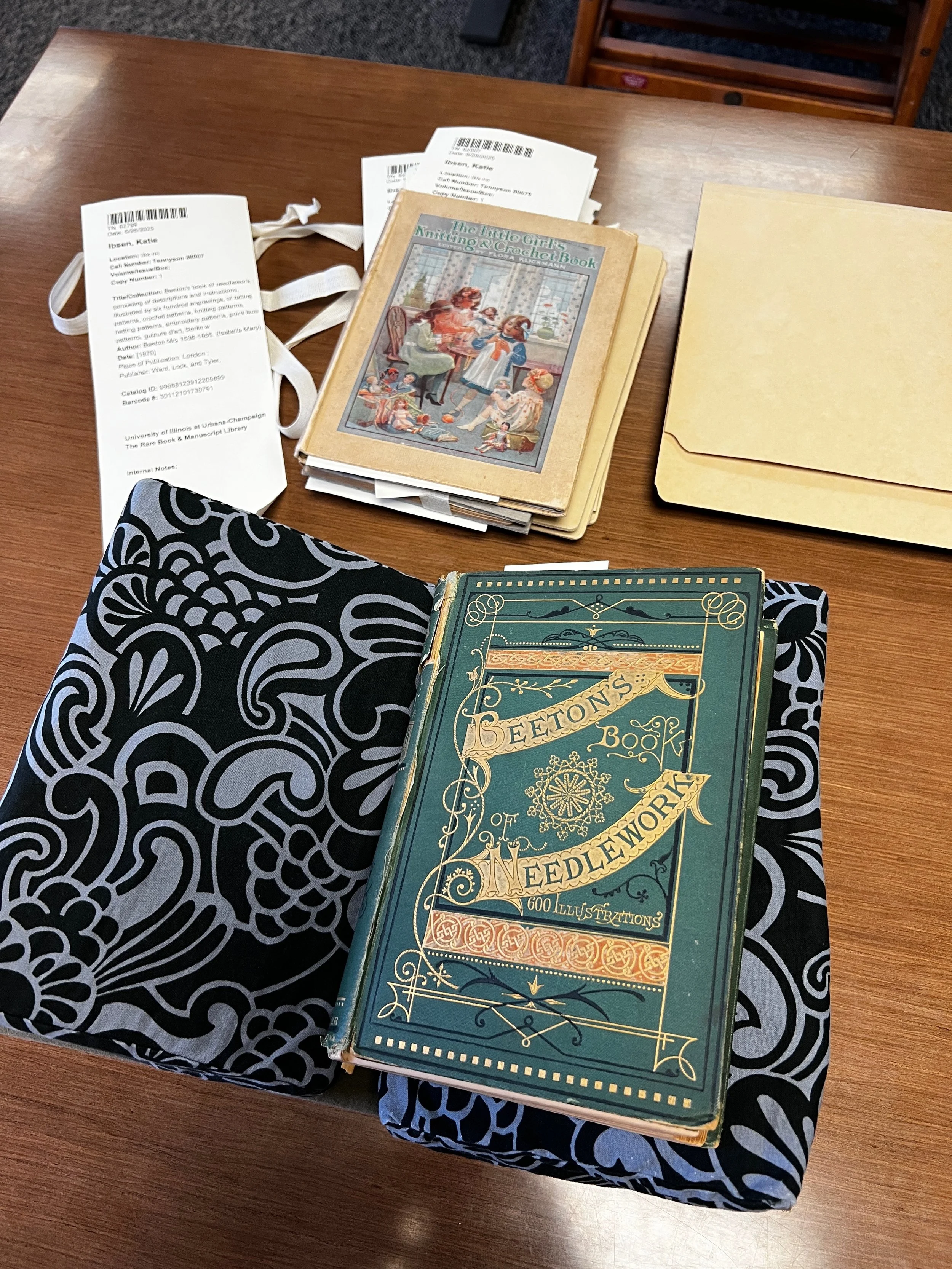
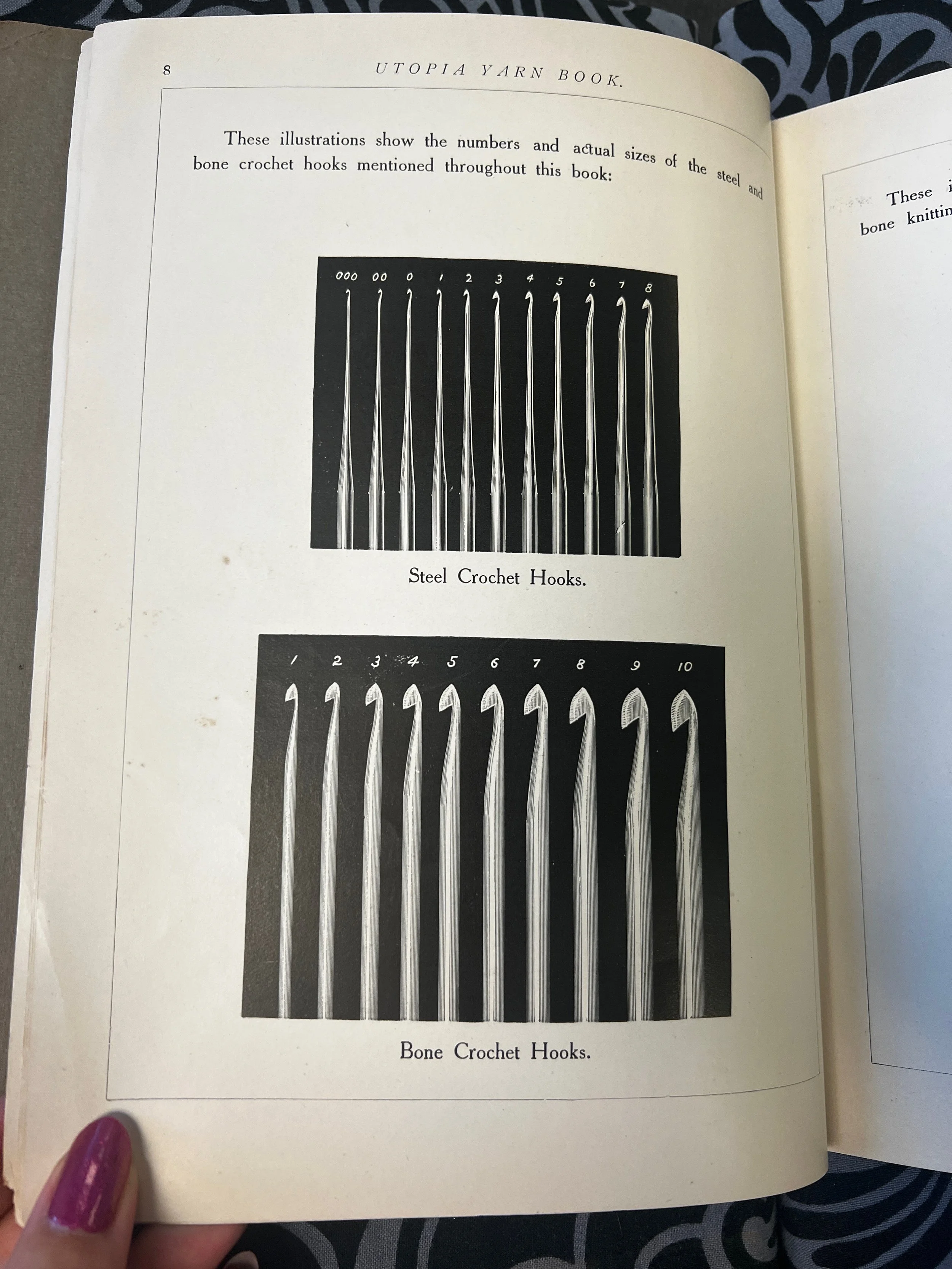
SIDE NOTE: I might have fallen down a bit of a rabbit hole here when I started to wonder about when yarn weights and needle sizes became something standardized - and let’s be real, it’s not like this kind of thing is even standardized today - but we at least have some common systems of communication for this kind of thing. We have the US sizes and mms for needles, the 0-7 number system for yarn weights, and then of course the different names for yarn weights… which is another contested spectrum. ANYWAYS, though there is evidence of the beginnings of standardization in the patterns that I looked at, one of the big players in standardization was the Craft Yarn Council of America which was incorporated in 1981. They worked to create industry systems of standardization including craft abbreviations, craft chart symbols, and a standard yarn weight system. This is where the yarn weight symbol of a hank of yarn wrapped in a label with a number 0-7 on it comes from, the number indicating the thickness of the yarn, 0 being lace which includes fingering weight yarn, 1 being super fine which includes sock weight, and so on with the final number 7 being jumbo - think like really thick roving. From there, they have encouraged others to adopt these standardization practices, which I’m sure we can all see evidence of when we go yarn shopping, but have done so by including big name yarn brands such as Berroco, Cascade yarns, Lion Brand, and Red Heart Yarns as members of the council meaning that these yarn brands agree to use this standard system. I think there’s definitely more to the story, but I thought it was an interesting aside! Anyways, back to the patterns.
SIZING: 13 patterns mentioned a variety of sizing, though many of them only provided a handful of sizes such as small, medium, and large, and those sizes are rather different than what our modern s/m/l might look like (AKA they’re all much smaller than what those sizes would be today). 10 patterns did not mention sizing at all, and 2 kind of mention sizes, but only for knitting stockings
For example, The last and best book on knitting, crocheting, embroidery and art needlework from 1880 includes a scale for socks and stockings for creating custom sized socks.
PHOTOS: At least 14 patterns included photos of the completed garments, but I somehow lost this count and I’m not re-doing it. It might be a little obvious to state this, but the newer the pattern, the more likely it was to have an image or a photograph. It became more common practice around the 1920s, but pattern books/booklets also start to shorten in length around this time and include less patterns than their predecessors, so there was also more room for photographs, especially as they became less expensive to reproduce in print.
TUTORIALS: Only 5 patterns included tutorials, and these typically came from books that acted as instruction on how to knit. Thus, most of these patterns expected some level of experience and skill in the knitter already, or the ability to puzzle through something themselves, or ask someone for help.
And lastly, you might have noticed that I saved the idea of clarity for last. This is for two reasons:
A: I think outlining the other characteristics of the patterns, as characteristics such as gauge, charts, tutorials, etc. are altogether a part of what makes a pattern clear…
But also, clarity is a very subjective term. What I consider clear and comprehensible is going to be different than what you would consider clear versus what a seasoned knitter would. I think this largely comes down to experience and skill
HOWEVER, there are definitely differences in how much instruction patterns provide (especially where the age of a pattern is concerned), which is definitely a significant factor in clarity. Let’s take a look at some examples, shall we?
See video for examples
Summary
OKAY so that’s a lot of information about old knitting patterns. Let’s zoom out a bit and just briefly summarize all of that and then we can talk a little bit about how this compares to modern patterns that you can find today on platforms like Ravelry.
So: Older patterns tend to only provide written instruction. If charts are included, they are typically only colorwork charts. Gauge information was NOT commonly provided until the turn of the century so it was largely up to the knitter to just… figure it out. Yarn weight wasn’t really standardized until the late 20th century, so where fiber type and thickness was reliably provided, it was typically found in later patterns that were distributed by yarn mills as they just recommended that you use their yarns and didn’t necessarily provide enough information to make substitutes. Essentially none of the patterns were size inclusive nor included tutorials dedicated to techniques used beyond basic instructions. About half of the patterns included photos, and these became increasingly more common around the turn of the 20th century. And the older the pattern, the shorter the instructions were likely to be, and the less clear they were likely to be. Standardized terms didn’t become popularly used, in my opinion, until magazines like Vogue knitting were popularized in the 80’s - and let’s be real, standard terms are still a bit iffy which is why many modern patterns often include an explanation of terms.
Compared to modern knitting patterns…
Now, I did not do the same survey of modern patterns that I did of vintage/antique patterns, but based on my experience and, hopefully, your experience, I think it’s fairly safe to say that modern patterns are, generally speaking, by these metrics both ‘good’ and better than older patterns.
See, the thing is, because of indexing sites like Ravelry we have the ability to find patterns that fit our skill level and desires, including these common characteristics we have established as being ‘good’ patterns. I would argue that this means that modern patterns, given that they provide so much more information, tend towards being what we now consider a ‘good’ pattern. Let’s take a look at Florence Miller’s step by step sweater for example. This is a beast of a pattern in that it includes a variety of video tutorials, literal step by step handholding instructions, provides robust information about gauge, it has seven different sizes, a variety of yarn suggestions, an explanation of terms, so on and so forth - AND ITS FREAKING FREE.
It’s right there at the top of the “whats hot” page on Ravelry. So many people have knit it, and have shared their knitting process/challenges on the internet, that you would be able to, without a doubt, knit this pattern successfully. I don’t think we could expect the same experience from an older knitting pattern that doesn’t even tell you what size needles to use. So why steal patterns when perfectly good, free patterns already exist?
You know what else is free? The library. Just go to the library and knit something from all of those free pattern books. Oh, they’re not trendy? Well, try having an imagination. Knit it with a trendy yarn, change something about the design or - god forbid - learn something about pattern design/garment construction and draft something for yourself. That’s just the thing though - learning how to come up with these kinds of things on your own requires some friction. It requires that we struggle through the discomfort of finding new information, processing that information, and then the trial and error process of applying that information. It’s the same exact process that a designer goes through when creating the designs that you’re out here stealing - and I think if we all took a little, teensy bit of time and initiation to try our hands at it, you would feel different about stealing patterns.
I think the same is true when it comes to making anything. Making something, especially clothes whether that’s through knitting, crochet, sewing, etc, teaches you how much effort, labor, materials etc goes into a completed garment. Going through that process yourself completely changes your perspective on the value and worth of our material world and for the better in my opinion.
Side note: I also wonder if people think that modern knitting patterns are ‘bad’ in the same way that they think that modern literature is ‘bad’ - not in that writing or knitting patterns are actually becoming WORSE, but that we’re still sifting through the good and the bad. The things that endure long enough to become ‘good’ literature endure because they were good and rose to the top out of a sea of publishing. Like, bad romances, serial publications, harlequins, etc all existed in the period of time that people lament was the last time publishing was good. I wonder if the same applies to knitting patterns? Just… not enough time has passed for us to have decided which patterns are good and worth enduring, and which just aren’t. I also side-eye this conversation bc like, if you’re a new designer, what chance do you have if people are ripping you apart for your first try. Like - was your first knitted object all that good?? Probably not! Like damn, give people a chance to be bad so that they can get good.
Anyways, I’m getting a little off track and rant-y here. Let’s bring it back to the patterns I looked at. Hopefully I have effectively demonstrated how knitting patterns have, in fact, gotten BETTER with time. The characteristics that we look for in what we consider a ‘good’ knitting pattern have become more and more common practice through history to the point that we have really incredible, FREE patterns available to us at the click of a button.
Conclusion
But more than this, I think what we’ve discussed here brings up some interesting further questions and observations about how knitting patterns themselves have changed over time, but also their creation and distribution of knitting patterns.
Moved from home instruction and domestic labor → leisure time/hobby (mostly bc of the industrialization of fashion and women becoming a part of public life and the workforce)
Publications moved from individuals → yarn mills → back to individuals (hustle culture) and or/niche hobby publications like Vogue Knitting
Going back to the individual is a symptom of what my friends?..... capitalism!
Now, what I found more interesting about all of these patterns is what the patterns made, the language in the patterns, and what I think that says about women’s social roles at the time the patterns were created. For example, most patterns were utilitarian in purpose, creating objects that were either meant as household linens, for clothing children, or for selling at the bazaar to make some extra income. There are patterns that made garments meant to be worn by the knitter herself, but they were not nearly as common as the previously mentioned objects. This shifts as we get closer to the turn of the century, but what doesn’t really change is the language in these patterns. They often speak to the virtue of a leisure craft like knitting - busy hands and the devil and all - and ascribe the labor of the knitter primarily as a function of serving others rather than the knitter themself. This has, obviously, changed as women’s role and position in society has changed, but it has been interesting to observe in my research nonetheless.
All of that to say, I have a lot more research and writing ahead of me because I can’t stop thinking about these knitting patterns - and I didn’t even bring up some of the oldest knitting patterns that still exist today that date back all the way to the 16th and 17th centuries! Now that’s a topic for another video.
Anyways, I’m going to wrap it there. I hope you found this half commentary half knitting history video interesting. If you’re not subscribed already, please do so, hit the like button, and tell me what pattern you think is the best pattern you’ve ever knit based on these criteria! Go ahead and share this video with a friend if you are so inclined, and be sure to check out my ko-fi page if you would like to support me financially so I can spend more time dedicated to bringing you interesting knitting and fiber history stories. With that, I’ll see you in the next video! Bye!
Links and Bibliography
https://www.ravelry.com/patterns/library/step-by-step-sweater
Atkinson, Jennie. “Unravelling the Knitting Pattern.” Text 36 (2008): 21–25.
Black, Sandy. Knitting: Fashion, Industry, Craft. With Victoria and Albert Museum. V & A Pub., 2012.
Macdonald, Anne L. No Idle Hands: The Social History of American Knitting. First edition. Ballantine Books, 1988.
Philiatros. Natura Exenterata: Or Nature Unbowelled by the Most Exquisite Anatomizers of Her. Wherein Are Contained Her Choicest Secrets Digested into Receipts, Fitted for the Cure of All Sorts of Infirmities. With Wellcome Library. London : H. Twiford [etc.], 1655. http://archive.org/details/b30332758.
Rutt, Richard. A History of Hand Knitting. Batsford, 1987. https://archive.org/details/historyofhandkni0000rutt.
Victoria and Albert Museum. “The History of Hand-Knitting · V&A.” Accessed January 26, 2026. https://www.vam.ac.uk/articles/the-history-of-hand-knitting.